Successful Advocacy Campaigns: Case Studies and Lessons for Your Next Campaign
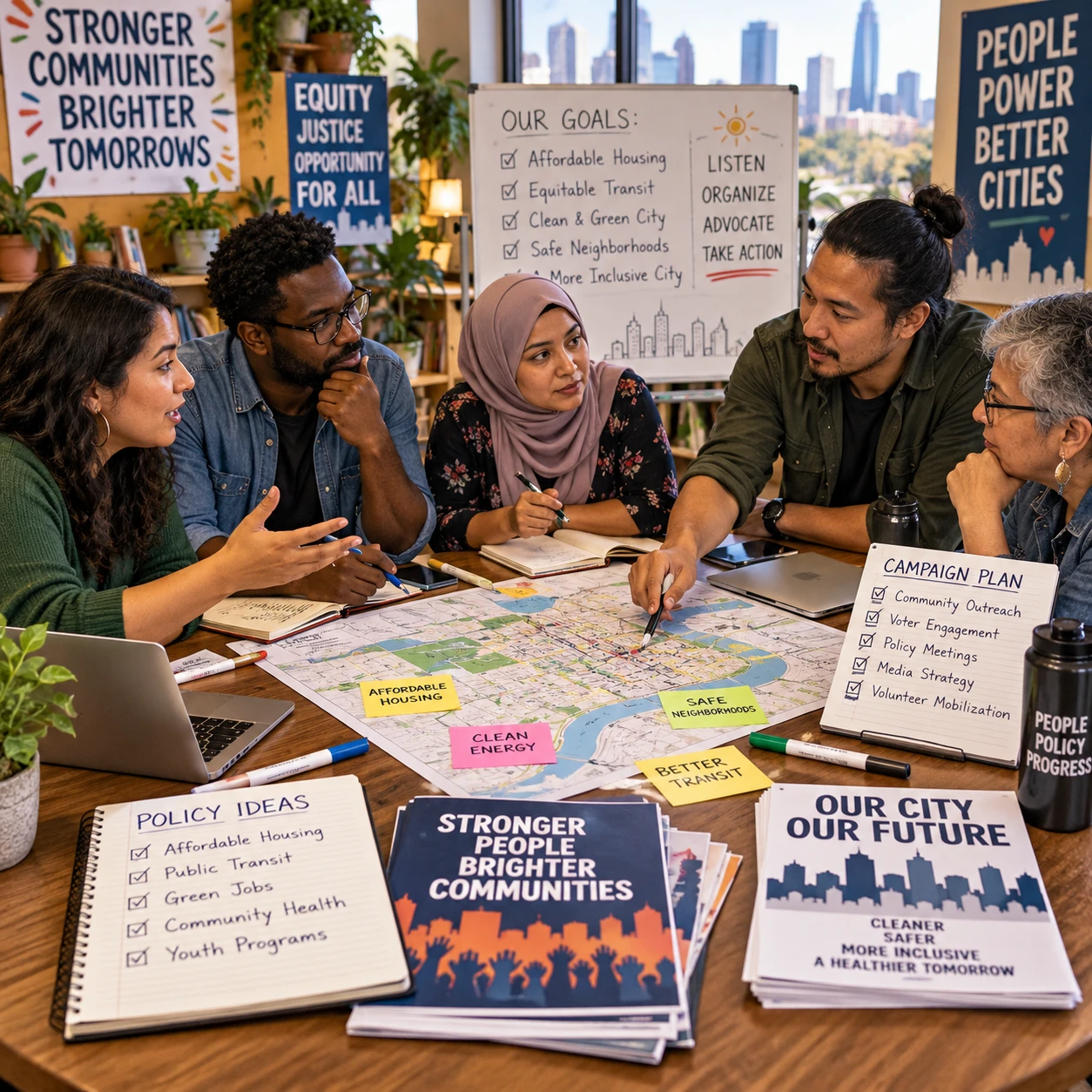
Successful advocacy campaigns turn a clear public concern into sustained pressure for change. Their results may include a policy shift, stronger community participation, or new decision-makers willing to engage; the tactics differ, but the strongest campaigns connect people, evidence, and a specific goal.
What Makes an Advocacy Campaign Successful?
An advocacy campaign is successful when it makes measurable progress toward a defined goal, whether that means policy change, stronger public engagement, or increased power for affected communities. Awareness matters, but it is a step toward impact, not proof of impact by itself.
Start by separating outputs from outcomes. A petition’s signature count, event attendance, and media coverage are outputs. A meeting with a decision-maker, a budget commitment, a change in public practice, or a policy adopted are outcomes. Some important effects, such as stronger relationships among community groups, take longer to show up in formal decisions.
A useful way to assess a campaign is to check three layers:
- Reach: Did the campaign connect with the people who can influence the issue, including affected communities and decision-makers?
- Influence: Did it change public understanding, institutional priorities, or the political cost of inaction?
- Durability: Is there a realistic path to implementing and sustaining the change?
Campaign strategy should match the decision being sought. A local service change may require community organizing and direct engagement with a council, while national legislation may call for coalition-building, public communications, and sustained pressure on elected representatives. There is no single winning tactic; success depends on context, timing, resources, and who holds power.
Case Study 1 — Building a Coalition Around a Shared Goal
Coalition-building can increase an advocacy campaign’s reach and credibility when partners agree on a concrete goal and coordinate their work. The U.S. civil rights movement offers a well-documented example of organizations and communities joining forces to challenge segregation and racial discrimination.
The movement was broad, decentralized, and shaped by many leaders, local groups, students, faith communities, and legal advocates. It did not operate as one organization with one campaign plan. Across different efforts, partners used nonviolent protest, community organizing, legal challenges, voter registration, and public communication to press for change. The 1963 March on Washington for Jobs and Freedom, organized by a coalition of civil rights, labor, and religious leaders, brought diverse concerns into a shared public demand.
The Civil Rights Act of 1964 prohibited discrimination in major areas of public life, while the Voting Rights Act of 1965 addressed barriers to voting. These outcomes followed years of organizing and legal and political work; no single march or tactic alone explains them. The National Archives overview of the Civil Rights Act provides context on the legislation and its significance.
Lesson for campaigners: build around a specific shared objective, not a vague statement of solidarity. Agree on decision-makers, roles, public language, and how disagreements will be handled. Coalitions can bring new audiences and skills, but they also take time to coordinate. Partners should preserve room for local leadership and avoid letting the most resourced organization speak for everyone.
Case Study 2 — Turning Personal Stories Into Public Awareness
Personal storytelling can make an advocacy issue understandable and urgent, especially when people closest to the issue shape how their experiences are shared. The AIDS Coalition to Unleash Power (ACT UP), founded in New York in 1987, used public protest and direct action to challenge the response to the AIDS crisis.
ACT UP brought attention to the experiences of people with AIDS and pushed institutions to respond to the epidemic. Its tactics included demonstrations, visual symbols, media engagement, and demands related to research, treatment access, and public policy. The campaign’s memorable imagery helped carry its message beyond meetings with officials, while members with direct experience of the crisis helped define what needed to change.
ACT UP’s influence is often associated with increased pressure on government and health institutions and changes in how AIDS research and treatment access were discussed. That history is complex: progress came through sustained activism, scientific work, community knowledge, and institutional decisions. A single slogan or image cannot stand in for those forces or establish a complete measure of the campaign’s impact.
Stories work best when they connect lived experience to a clear public ask. Before sharing a personal account, campaigners should secure informed consent, explain where and how it will appear, and consider risks to the storyteller. Ethical storytelling gives people control over their words and avoids reducing anyone to a symbol. Pairing a story with credible evidence can help audiences understand both an individual experience and the broader policy problem.
Case Study 3 — Mobilizing Communities for Action
Grassroots mobilization is most effective when people have practical ways to participate and can see how their actions connect to a decision. The Montgomery Bus Boycott of 1955–1956 shows how community organizing sustained collective pressure against racial segregation in public transportation.
After Rosa Parks was arrested for refusing to give up her seat, Black residents in Montgomery organized a boycott of city buses. Local leaders and organizations helped coordinate transportation, communication, and participation over many months. The effort required more than a public call: people needed ways to get to work and school, consistent information, and a shared understanding of the campaign’s purpose.
The boycott ended after the U.S. Supreme Court affirmed that bus segregation was unconstitutional. It is a powerful example of organized community action, though it should not be simplified into a story of one person or one tactic. The campaign depended on collective participation, local leadership, legal advocacy, and the willingness of residents to bear real costs.
For current campaigns, make the call to action specific and accessible. Instead of asking people only to “show support,” invite them to attend a public hearing, contact a named decision-maker, join a canvass, or share feedback at a community meeting. Explain what happens next and offer options for different levels of time and risk. Public mobilization can create pressure, but participation needs follow-up and a credible route to influence.
Lessons Across the Campaigns
These advocacy campaigns show that durable progress usually combines a clear goal, trusted relationships, and tactics suited to the people and institutions involved. Coalition-building, storytelling, and grassroots mobilization can reinforce one another, but none guarantees policy change on its own.
Several common principles stand out:
- Define the change: Name the policy, practice, funding decision, or institutional action the campaign seeks. A focused ask helps partners and supporters understand what success means.
- Center affected communities: People closest to an issue bring knowledge that outside organizations may miss. Give them meaningful influence over strategy and public messaging.
- Match tactics to power: Research, coalition meetings, public testimony, media work, and demonstrations serve different purposes. Choose based on who can make the decision and what might move them.
- Plan for sustained effort: Organizing takes time. Build capacity for follow-up, changing conditions, and setbacks rather than relying on one attention-grabbing moment.
- Evaluate more than visibility: Track participation and reach, then look for evidence of changed relationships, institutional commitments, implementation, and community-defined progress.
A useful distinction is between attention and leverage. Attention helps people notice an issue. Leverage gives them a credible way to influence the decision. Campaigns need both, but a spike in coverage or online activity may not move the people with authority unless it is connected to an organized demand.
Applying These Lessons to Your Own Advocacy Campaign
To plan an advocacy campaign, define the outcome, identify who controls it, learn from affected communities, choose tactics that fit the decision, and evaluate progress regularly. This sequence keeps campaign activity tied to a purpose rather than treating visibility as the goal.
- Set a specific objective. Write down what should change, who has the authority to change it, and by when. A clear objective might be a public agency adopting a named practice or a local government funding a defined service.
- Map people and power. Identify affected groups, allies, potential opponents, decision-makers, and the moments when a decision can be influenced. Ask community members what barriers or risks the campaign must account for.
- Choose a campaign mix. Select tactics that fit the context: coalition meetings, community organizing, public testimony, a storytelling project, or a public awareness effort. Assign owners and dates so the strategy can be carried out.
- Set indicators before launch. Track both activity and change. For example, record who participates, whether decision-makers respond, what commitments are made, and whether the promised action is implemented.
- Review and adapt. Hold regular check-ins with partners and community members. If an approach raises awareness but does not reach decision-makers, revise the route to influence rather than simply increasing the volume of the same activity.
Campaign evaluation should combine numbers with feedback. Attendance, responses, and policy milestones show what happened; interviews or community discussions can explain why. Be candid about what the campaign cannot prove. Policy adoption may be a major milestone, but implementation and lasting benefit require continued attention.
Before launching, ask one final question: can a participant explain the goal, the next action, and how that action could affect the decision? If the answer is clear, the campaign has a foundation for coordinated advocacy. If not, simplify the message and strengthen the link between community participation and the change sought.