Ethical Considerations in Advocacy: Transparency and Accountability
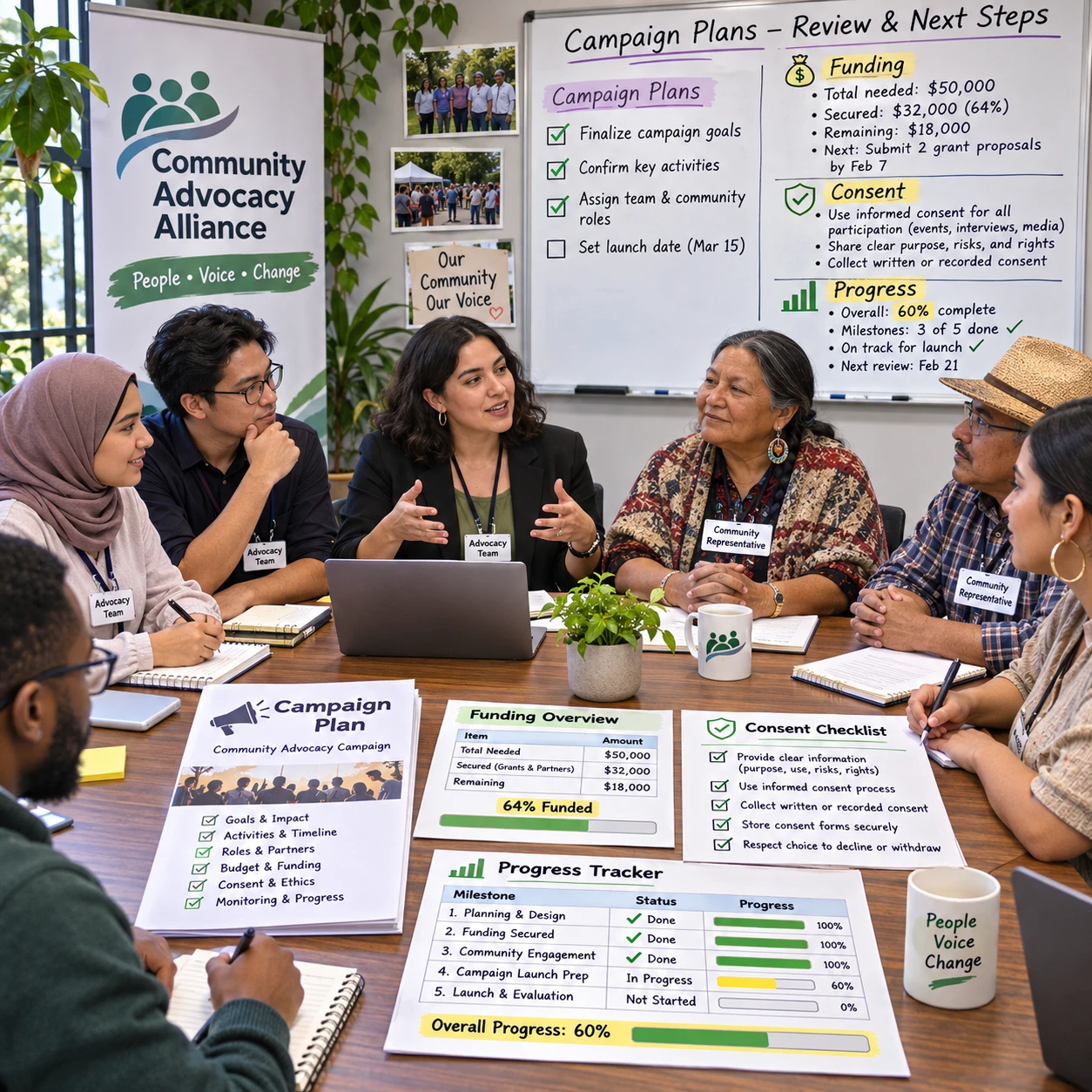
An advocacy campaign can pursue an important cause and still cause harm if people cannot understand who is behind it, how decisions are made, or how their stories and data will be used. Transparency and accountability help teams earn trust, respect affected communities, and take responsibility for the consequences of their work.
These practices are ongoing commitments, not a one-time statement or a polished report. They give stakeholders practical ways to ask questions, influence decisions, raise concerns, and see how a campaign responds.
Why Ethics Matter in Advocacy
Ethical practices help an advocacy campaign build trust, strengthen legitimacy, and act responsibly toward the people affected by its goals and methods. They make it easier for stakeholders to understand a campaign’s intentions and judge its actions.
Advocacy involves choices about which issues to emphasize, whose voices to elevate, and what tactics to use. Even a well-intentioned campaign can misrepresent a community, overstate its influence, or overlook risks to participants. Ethical standards help teams notice those risks before they become lasting damage.
Transparency explains what a campaign is doing; accountability shows how it answers for what it does. Neither guarantees agreement or a successful outcome. Together, however, they make a campaign’s decisions more understandable and give people a route to challenge mistakes.
Trust is especially important when a campaign asks people to share personal experiences, attend public events, sign a petition, or support a proposed change. A clear explanation of the campaign’s purpose and limits lets people decide whether and how to participate. That choice supports credibility even when a campaign cannot deliver its desired policy result.
What Transparency Looks Like in a Campaign
Transparency in an advocacy campaign means communicating its goals, methods, funding, and decision-making in language people can understand. It also means updating that information when the campaign changes direction.
A useful public overview should answer four questions: What change is the campaign seeking? What activities will it use? Who is funding or supporting the work? Who makes key decisions? If the campaign is still developing its strategy, say so rather than presenting an early plan as final.
Funding disclosure should be specific enough to help readers assess relevant interests. Depending on the campaign, this may include major donors, institutional grants, in-kind support, or funding restrictions. Explain whether funders can influence research, messaging, or campaign priorities. If a donor’s identity cannot be shared for a legitimate safety or privacy reason, state that limitation and describe the available oversight instead.
Transparency also covers methods. A campaign should distinguish verified findings from estimates, explain how it selects examples or evidence, and avoid presenting a planned activity as a completed result. A short, dated campaign page or briefing document can record the mission, tactics, decision process, funding approach, and contact for questions.
More disclosure is not automatically better. Publishing personal information, sensitive security details, or unverified allegations can create harm. Share enough for people to understand and scrutinize the work, while protecting information that could expose participants or undermine safety.
Building Accountability Into Campaign Work
Advocacy teams demonstrate accountability by assigning responsibility, tracking commitments, creating accessible feedback channels, and explaining how they respond to concerns. A policy only matters when someone is responsible for carrying it out.
Start with a simple responsibility map. Name who approves public claims, handles community feedback, safeguards data, reviews funding disclosures, and corrects published errors. In a small campaign, one person may hold several roles; the important point is that responsibilities are clear and covered.
Then turn promises into commitments that can be checked. Record the action, owner, due date, and status in a shared tracker. For example, if a campaign promises to consult residents before choosing a public message, document when consultation will happen, how input will be collected, and who decides what changes follow.
- Offer a clear contact route: provide an email address or other accessible channel for questions and complaints.
- Set response expectations: acknowledge messages within a stated period and explain when a full response may take longer.
- Keep a record: log concerns, decisions, corrections, and follow-up without collecting unnecessary personal details.
- Close the loop: tell people what changed, what did not, and why.
Accountability does not require accepting every request. It does require a fair process, a reasoned response, and a way to escalate serious concerns. A campaign can also invite an independent adviser or trusted community partner to review complaints when internal relationships make impartial handling difficult.
Centering Affected Communities
Ethical advocacy centers affected communities by involving people in decisions that shape how their experiences are represented, while protecting informed consent and data privacy. Consultation should influence the work, not merely decorate it.
Participation can happen at different stages: defining the issue, testing campaign language, choosing tactics, and reviewing outcomes. Explain which decisions are open to community input and which constraints remain, such as a fixed deadline or legal requirement. This avoids implying that consultation gives participants control when it does not.
Informed consent means people understand what they are agreeing to before they share a story, image, name, or testimony. Explain where material may appear, whether it could be reused, and how someone can withdraw permission where feasible. Consent to one use should not be treated as blanket permission for every future use.
Data privacy needs the same care. Collect only information the campaign needs, limit access to sensitive records, and set a retention period. Avoid putting identifying details into public notes or shared tools without permission. If a person faces possible retaliation, consider whether anonymizing a story is enough; details such as location, job, or timing can identify someone even without a name.
Participation also has costs. Meetings may require travel, childcare, interpretation, or time away from work. Budget for access needs where possible, and be clear about whether participants will be compensated. Respectful engagement includes recognizing people’s expertise and avoiding pressure to disclose painful experiences.
Managing Conflicts of Interest and Ethical Risks
Campaigns manage conflicts of interest by identifying relevant relationships, disclosing them clearly, and reviewing decisions that could be affected. A conflict does not automatically prove wrongdoing, but leaving it undisclosed can undermine confidence.
Potential conflicts may involve a funder’s policy interests, a campaign leader’s financial ties, a partner’s public position, or a personal relationship with a decision-maker. Create a simple disclosure process that asks team members and advisers to report interests connected to their role. Review disclosures when funding, partnerships, or campaign priorities change.
When a conflict is identified, choose a proportionate response. Options include publishing a disclosure, having another person review a claim, removing someone from a specific decision, or declining funding with conditions that compromise independence. Record the reasoning so the response can be understood later.
Watch for ethical risks beyond funding: misleading statistics, unverified accusations, token participation, consent that is too broad, and pressure to meet a campaign target at the expense of participant welfare. Before a major public action, ask who could be harmed, what evidence supports the message, and whether people represented have had a meaningful chance to raise concerns.
A written checklist can help, but it cannot anticipate every situation. Teams should make it normal to pause a tactic when new information suggests harm, then explain the decision to the people affected.
Reporting Progress and Learning From Outcomes
Ethical impact reporting shares what a campaign did, what changed, what remains uncertain, and what the team learned. It distinguishes activities from outcomes and avoids claiming credit for changes the campaign cannot substantiate.
A useful update might report actions completed, participation levels, policy or practice changes observed, and commitments still in progress. Include the reporting period and explain how the information was gathered. If several organizations contributed to an outcome, acknowledge that rather than presenting the result as a campaign’s achievement alone.
Report setbacks plainly. If an event was canceled, a policy proposal stalled, or feedback revealed that a message caused harm, describe what happened and what the team is changing. Honest reporting can include uncertainty; it should not turn an early indication into proof of long-term impact.
Use reports as a learning tool, not just a record of success. Compare campaign commitments with actual actions, invite feedback from stakeholders and affected communities, and assign owners to any agreed changes. A brief quarterly update may be more useful than an annual report that arrives too late to influence current decisions.
When a campaign changes its goals or methods, explain why and how input shaped the change. This creates a traceable link between promises, actions, and results, and helps supporters make informed choices about continued involvement.
Frequently Asked Questions
What does transparency mean in an advocacy campaign?
Transparency means clearly explaining a campaign’s goals, methods, funding, decision-making, and limitations. It also means updating that information when circumstances change, while protecting sensitive personal or safety-related details.
How can a campaign demonstrate accountability?
Assign owners to commitments, track deadlines and progress, offer accessible channels for questions or complaints, and explain how the team responds. When the campaign makes an error, correct it visibly and describe steps to prevent a repeat.
Should advocacy campaigns disclose their funding?
Campaigns should disclose funding and relevant donor conditions in a way that helps stakeholders assess potential influence. If safety or privacy limits disclosure, explain the constraint and provide other information about oversight and decision-making.
How can campaigns protect the privacy of people they represent?
Collect only necessary data, explain its intended use, obtain informed consent, restrict access, and set a retention limit. Before publishing a story, check whether its details could identify or expose the person even if their name is removed.