Building Coalitions: How to Partner With Organizations for Greater Advocacy Reach
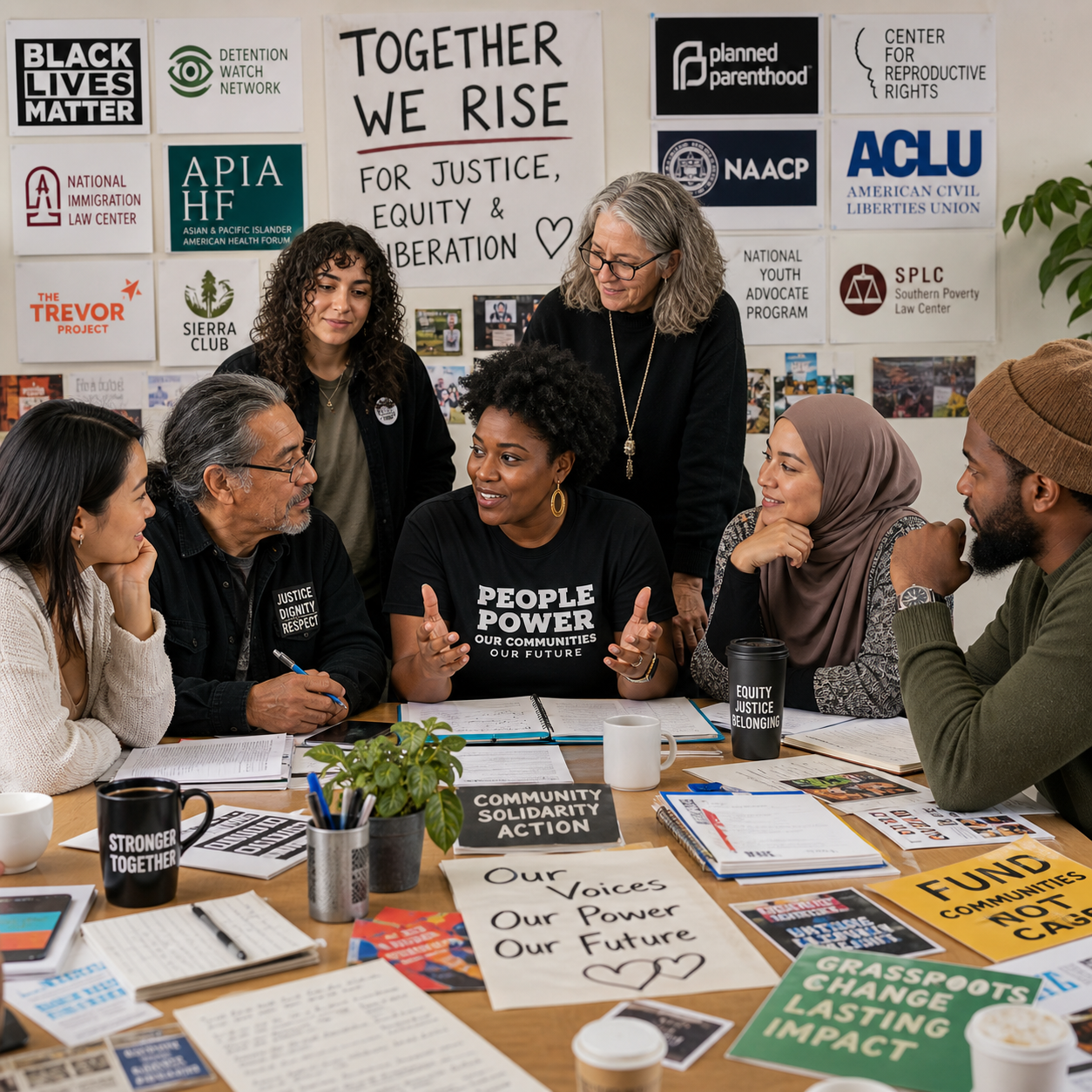
A strong advocacy campaign rarely succeeds through one organization acting alone. Coalitions bring together community organizations, nonprofit organizations, professional associations, informal groups, and people directly affected by an issue to create broader support and coordinated action.
Effective coalition building requires more than collecting logos for a website. It depends on shared goals, mutual trust, clear responsibilities, and respect for each partner’s independence. When those foundations are in place, strategic partnerships can expand an advocacy campaign’s reach while improving its credibility, relevance, and ability to influence decisions.
Why Coalitions Strengthen Advocacy Campaigns
Coalitions strengthen advocacy campaigns by combining networks, expertise, credibility, and capacity around a common objective. A coordinated group can often reach more people and take more varied forms of action than one organization can manage alone.
A community organization may bring trusted relationships with residents, while a nonprofit organization contributes policy knowledge, research, or campaign infrastructure. Another partner may offer media experience, legal expertise, volunteers, translation support, or access to a professional audience. These contributions are valuable because advocacy depends on both public support and informed, sustained action.
Partnerships can create several practical advantages:
- Broader audiences: each organization can introduce the campaign to its own members, supporters, mailing lists, and social networks.
- Greater credibility: a coalition can demonstrate that an issue matters across communities and sectors, especially when affected people have meaningful leadership roles.
- Specialized expertise: partners can strengthen research, communications, public education, policy analysis, and event planning.
- Coordinated action: organizations can align petitions, public meetings, testimony, educational events, press activity, and constituent outreach.
- Shared capacity: resource sharing may reduce duplicated work and make limited staff time, funding, venues, and technology go further.
Reach alone is a weak measure of success. A large audience that takes no relevant action may contribute less than a smaller group that attends a hearing, contacts decision-makers, recruits volunteers, or helps change public understanding. The useful question is: Which partnership helps move the campaign’s specific objective forward?
Identify the Right Organizations to Partner With
The right coalition partners share meaningful alignment with the advocacy campaign while adding distinct strengths, relationships, or perspectives. Mission fit matters more than audience size, and community trust should carry more weight than a prominent name.
Begin by describing the campaign’s non-negotiables. Clarify the issue, the people most affected, the change being requested, and the values that guide the work. This prevents a campaign from pursuing organizations simply because they have visibility.
Assess prospective partners using five filters:
- Mission alignment: Does the organization’s stated purpose support the campaign’s direction?
- Audience overlap: Can it reach people who matter to the advocacy objective, including audiences the campaign currently misses?
- Community trust: Do affected communities view the organization as accountable and credible?
- Capabilities: Can it contribute staff time, volunteers, research, communications, venues, technology, or lived experience?
- Potential conflicts: Could its public positions, funding relationships, reputation, or operating style undermine coalition trust?
Do not assume that organizations with similar names or broad values have identical priorities. A national nonprofit may focus on policy reform, while a neighborhood group may prioritize immediate services and local accountability. Those differences can strengthen a coalition when acknowledged early. They can also create friction if one partner expects every organization to communicate, decide, or move at the same speed.
Include smaller and less visible groups in the search. Organizations serving people with disabilities, minority-language communities, rural residents, young people, or directly affected workers may offer insight that larger institutions cannot replicate. Inclusion should involve influence and resources, not simply an invitation to endorse a finished plan.
Map Stakeholders and Define Shared Goals
Stakeholder mapping helps an advocacy campaign prioritize potential partners by influence, connection to the issue, affected-community accountability, and willingness to act. The coalition should then convert broad agreement into a small number of measurable shared goals.
Create a simple stakeholder map with four categories:
- Core participants: organizations and community representatives directly affected by the issue or central to the campaign’s legitimacy.
- Strategic amplifiers: groups with strong communications channels, public credibility, professional networks, or policy access.
- Technical contributors: partners offering research, legal analysis, data, training, accessibility, or implementation knowledge.
- Potential supporters: organizations that may join later after the campaign demonstrates clarity, momentum, or evidence.
Next, write a coalition purpose statement. A useful statement identifies the desired change, the decision or audience that must be influenced, the communities involved, and the timeframe. For example: “Over the next six months, participating organizations will build public support for accessible transit improvements by educating residents, collecting testimony, and encouraging the city council to adopt a defined funding proposal.”
Set boundaries alongside goals. Agree on which positions the coalition will take collectively, which issues partners may address independently, and what claims require evidence or approval. This protects autonomy and reduces later disputes over language.
A practical test is the three-part alignment check: shared outcome, shared minimum principles, and shared willingness to contribute. If any one of these is absent, a public coalition may be premature. The organizations can still exchange information or cooperate on a limited activity.
Approach Potential Partners With a Clear Value Proposition
Partnership outreach works best when it shows why the collaboration matters to the organization, its community, and the advocacy goal. A concise, researched invitation is more effective than a generic request to “support the campaign.”
Before contacting a prospective partner, review its mission, current programs, public statements, decision-making process, and recent campaigns. Identify a genuine connection between its work and the proposed coalition. Then prepare a short briefing that explains:
- the problem and the change the campaign seeks;
- why the issue matters to the partner’s audience or mission;
- what the coalition already has, such as research, community relationships, or campaign materials;
- what participation could involve;
- what the partner could gain, including shared learning, stronger community influence, or reduced duplication;
- the practical next step, such as a 30-minute discovery call.
Use language that invites exploration rather than presumes commitment. A first conversation should test fit, listen to concerns, and learn what the organization can realistically offer. Ask about its priorities, approval process, accessibility needs, communications rules, and capacity during the proposed timeframe.
Make the initial request easy to evaluate. Instead of asking for unlimited promotion, propose a specific pilot: co-host one educational event, review a briefing document, contribute a speaker, or coordinate outreach during a defined week. A small, well-run activity can establish trust more effectively than a large announcement made before the coalition is ready.
When useful, share credible background material such as the Centers for Disease Control and Prevention guidance on evaluating policy and partnership work. External evidence can support planning, but it should complement local knowledge rather than replace it.
Establish Roles, Responsibilities, and Decision-Making
Coalition roles and responsibilities should be documented before public activity begins, including who leads, who approves shared materials, how resources are handled, and how disagreements are resolved.
A written coalition agreement does not need to be complicated. It should establish the operating rules that partners will rely on when deadlines become tight. Cover at least these areas:
- Leadership: name a coordinating organization, rotating chair, or shared steering group.
- Responsibilities: assign owners and deadlines for research, events, outreach, media, volunteer coordination, accessibility, and reporting.
- Decision-making: define which decisions require consensus, a vote, or approval from designated leads.
- Public representation: identify approved spokespeople and clarify whether individuals speak for the coalition or their own organizations.
- Resource sharing: record contributions of money, staff time, venues, mailing lists, technology, translation, and design work.
- Accountability: set reporting expectations and a process for raising concerns without retaliation.
Power imbalances deserve direct attention. A large organization may control staff, funding, or media access, while a small community group carries essential trust but has fewer resources. Consider stipends, shared visibility, accessible meeting times, language access, childcare support, and transparent credit for contributions.
One common mistake is treating consensus as universal agreement on every detail. A better model is agreement on the coalition’s purpose and minimum principles, with clear decision rights for specialized tasks. That approach protects cohesion without forcing every partner through the same internal process.
Coordinate Messaging and Public Campaign Activities
Coalition messaging should use a shared core message, while allowing each partner to communicate in its own voice and through channels its audience trusts. Consistency matters, but uniformity can weaken authenticity.
Develop a message guide containing the problem, the proposed solution, evidence, audience-specific benefits, a call to action, and answers to predictable questions. Keep the core message short enough for a social post or spoken introduction. Then create adaptable examples for newsletters, press statements, community meetings, videos, and educational resources.
Agree on facts that require verification and establish a rapid review process for public materials. Partners should know who approves coalition statements, how quickly corrections are issued, and what to do when a reporter requests comment. These details reduce contradictory claims and prevent avoidable reputational damage.
Coordinate activities around the advocacy objective rather than visibility alone. A campaign might combine:
- a joint public briefing that introduces the issue;
- community listening sessions that gather testimony;
- shared educational resources in multiple languages and formats;
- coordinated outreach to supporters before a policy deadline;
- a unified call to action linked to a specific decision or behavior;
- follow-up communications showing what happened and what comes next.
Let partners adapt examples and framing for their communities. A youth organization may focus on student experiences, while a professional association emphasizes implementation. Both can support the same policy request without sounding copied and disconnected from their audiences.
Sustain and Evaluate the Coalition
A coalition stays productive through regular communication, transparent progress tracking, recognition, and timely adjustment. Evaluation should measure meaningful advocacy progress and relationship health, not impressions alone.
Set a meeting rhythm that matches the campaign. Weekly coordination may be appropriate before a major public action; monthly meetings may suit a longer policy effort. Use a shared action log with decisions, owners, deadlines, risks, and unresolved questions. Send concise updates so partners who cannot attend remain informed.
Evaluate the coalition across four dimensions:
- Reach: Which audiences, communities, and decision-makers did partners engage?
- Quality of engagement: Did people understand the issue, participate meaningfully, and take the intended action?
- Campaign progress: Did the work influence public discussion, secure meetings, generate testimony, shift an institutional position, or advance the requested change?
- Partnership health: Did partners receive timely information, have a voice in decisions, and experience fair recognition and support?
Review both numbers and stories. Track event attendance, response rates, volunteer activity, partner participation, and policy milestones, but also collect feedback from community members and participating organizations. A campaign can achieve high online engagement while failing to represent the people most affected.
When partners disagree, return to the written purpose and minimum principles. Separate disagreements about facts, strategy, timing, and values; each requires a different response. Invite the affected parties to propose options, document the decision, and preserve a respectful path for organizations that cannot support one activity. A coalition built on forced agreement will usually become brittle.
Recognize contributions publicly and privately, including behind-the-scenes labor. At the end of a campaign phase, hold a learning review: what changed, who was reached, what burden fell unevenly, and what should be redesigned. The strongest strategic partnerships evolve because partners learn together, not because every phase follows the original plan.
Frequently Asked Questions About Coalition Building
How do advocacy campaigns find potential coalition partners?
Start with stakeholder mapping, community referrals, local directories, past campaign records, professional networks, and organizations already working on related issues. Prioritize groups with mission alignment, community trust, relevant capabilities, and access to audiences the campaign does not currently reach.
What makes an organization a good advocacy partner?
A good advocacy partner supports the campaign’s core purpose, respects affected communities, communicates reliably, and can contribute a realistic resource or capability. Size and visibility help only when they connect to meaningful campaign action.
How should coalition roles and responsibilities be defined?
Document leadership, task ownership, deadlines, approval rights, public representation, resource sharing, accessibility commitments, and conflict-resolution procedures. Review the agreement when the campaign changes phase or adds new partners.
How can partners coordinate messaging without losing their individual voices?
Agree on a small set of shared facts, principles, and calls to action. Give each organization room to choose its examples, tone, format, language, and audience-specific framing.
What should a coalition do when partners disagree?
Identify whether the disagreement concerns evidence, strategy, timing, or values, then use the agreed decision process. Record the outcome, explain the reasoning, and allow partners to maintain independent positions when those positions do not undermine the coalition’s stated purpose.