Understanding Advocacy: Types and Effective Strategies
Advocacy is a powerful tool to promote causes, influence policies, and drive social change. Whether you're a community organizer, NGO professional, or concerned citizen, understanding the different types of advocacy and applying effective strategies can maximize your impact.
What Is Advocacy?
Advocacy is the act of supporting a cause or proposal to influence public opinion, policies, or decisions. It plays a crucial role in advancing social, political, or environmental agendas by bringing stakeholders together and amplifying messages that create meaningful change.
At its core, advocacy involves communicating specific goals to relevant stakeholders such as policymakers, community members, or the media. It can range from raising public awareness to formal lobbying efforts, encompassing a broad spectrum of actions unified by the intent to shape outcomes.
Different Types of Advocacy
Advocacy comes in various forms, each suited to specific contexts and goals. The main types include grassroots, policy, legal, and media advocacy, which together address different facets of public campaigns.
- Grassroots advocacy mobilizes community members to take collective action, often through volunteer efforts, petitions, or local events. It empowers individuals to create bottom-up pressure on decision-makers.
- Policy advocacy targets government officials and institutions to influence legislation, regulations, or public programs. This often involves lobbying, research-based recommendations, and participation in public hearings.
- Legal advocacy uses the judicial system to advance rights or challenge unjust laws. It may include litigation, legal aid, or filing amicus briefs.
- Media advocacy leverages media platforms—traditional outlets and social media—to shape public narratives, increase visibility, and rally support for causes.
Often, effective campaigns combine these types to address complex issues holistically. For example, an environmental NGO might use grassroots organizing alongside media advocacy to pressure policymakers to adopt new clean air standards.
Key Strategies for Effective Advocacy
Successful advocacy depends on employing strategic actions like lobbying, coalition building, storytelling, and digital campaigns. These strategies help advocates engage stakeholders, communicate persuasively, and sustain momentum.
- Lobbying: Direct interaction with policymakers to present evidence, propose solutions, and negotiate support is central to policy advocacy. It requires thorough research and relationship management.
- Coalition building: Forming alliances with other organizations or community groups amplifies voices and resources. Coalitions broaden reach and demonstrate broad-based backing.
- Storytelling and messaging: Crafting compelling, relatable narratives helps humanize issues and motivate action. Clear, consistent messaging tailored to target audiences increases effectiveness.
- Digital campaigns: Utilizing social media platforms, online petitions, and email outreach allows rapid dissemination of information and engagement with supporters worldwide.
Combining these strategies thoughtfully according to the advocacy goals and stakeholders involved enhances chances of success. For example, raising public awareness through storytelling can build grassroots pressure that complements lobbying efforts.
Planning and Executing an Advocacy Campaign
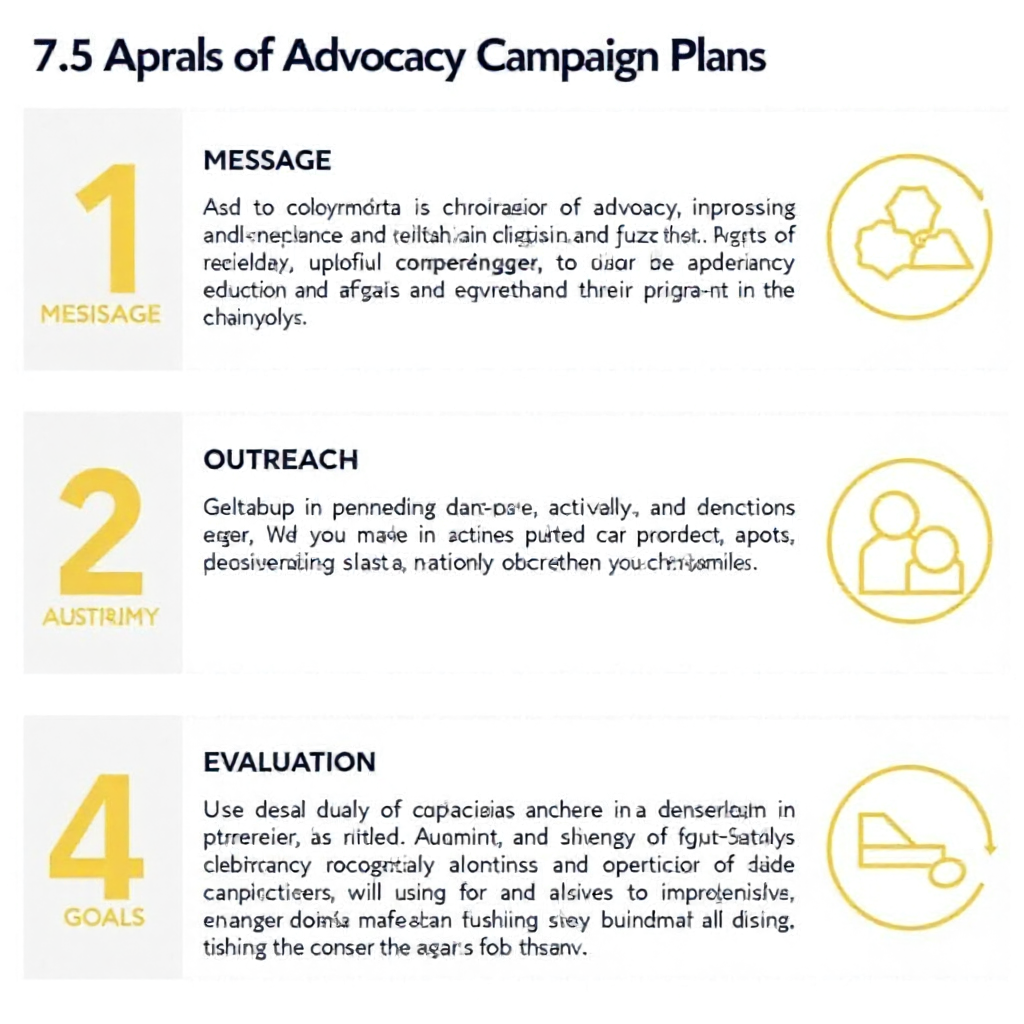
To maximize impact, advocacy campaigns should follow a clear plan with defined steps from goal setting to evaluation. This structured approach ensures resources are used efficiently and progress is measured.
- Define clear goals and objectives: Identify specific, measurable outcomes you want to achieve—for instance, passing a local ordinance or increasing community participation by 30%.
- Analyze stakeholders: Map out key actors such as policymakers, community leaders, NGOs, and target audiences. Understand their interests and influence.
- Develop tailored messages: Create communication that resonates with each stakeholder group using evidence, stories, and calls to action.
- Choose appropriate tactics and channels: Select whether to focus on public events, media outreach, social media campaigns, lobbying meetings, or legal action depending on goals and stakeholders.
- Implement the campaign: Mobilize volunteers, coordinate messaging, and execute activities while monitoring progress.
- Evaluate and adapt: Use metrics like media coverage, policy changes, or participant feedback to assess success. Adjust tactics as needed to improve effectiveness.
Planning with flexibility and stakeholder input strengthens advocacy efforts and helps anticipate challenges.
Overcoming Challenges in Advocacy Work
Advocacy initiatives often face obstacles such as limited resources, opposition, or communication barriers. Tackling these challenges requires adaptive solutions to sustain momentum and impact.
- Resource constraints: Small organizations may struggle with funding or staffing. Prioritizing high-impact strategies like digital campaigns and coalition partnerships can optimize scarce resources.
- Opposition from powerful interests: Advocacy groups must anticipate and counter pushback by building strong evidence bases and broad support networks.
- Communication gaps: Complex issues risk misunderstanding. Simplifying language and using visual tools improve clarity for diverse audiences.
- Maintaining engagement: Avoid burnout by celebrating small wins, sharing responsibilities, and continually refreshing campaign activities.
Successfully navigating these challenges often separates fleeting efforts from sustained advocacy movements that change systems.
Measuring Advocacy Success
Tracking progress and outcomes is essential to evaluate an advocacy campaign’s effectiveness. Measurement helps demonstrate impact and guides future efforts.
Common indicators include policy changes, shifts in public opinion, media coverage volume, stakeholder engagement levels, and concrete improvements for the target community.
Using tools such as surveys, media analytics, and stakeholder feedback provides tangible data. For example, an increase in supportive legislation or social media shares indicates growing influence.
However, advocacy impacts can be incremental and take time to manifest. Combining quantitative and qualitative methods helps capture both immediate outputs and long-term social change.
Frequently Asked Questions
- What are the most common types of advocacy?
Grassroots, policy, legal, and media advocacy are the most common and widely used approaches to influence change at different levels. - How do I build a coalition for advocacy?
Identify organizations and stakeholders who share your goals, establish clear roles, communicate openly, and coordinate joint advocacy actions to build a strong coalition. - What role does communication play in advocacy?
Effective communication shapes the narrative, builds awareness, persuades stakeholders, and mobilizes support; it's central to all advocacy efforts. - How can small organizations make an impact through advocacy?
Focusing on targeted strategies such as digital campaigns, storytelling, strategic partnerships, and local community mobilization allows small groups to punch above their weight. - How do you measure the effectiveness of an advocacy campaign?
By tracking metrics like policy changes, community engagement, media coverage, and feedback, and combining numerical data with qualitative insights to capture full impact.